

You flip on your air conditioner, and instead of cool, clean relief, your home fills with the unmistakable smell of dirty socks or a damp basement. If that sounds familiar, you’re not imagining things — and you’re definitely not alone. A musty AC smell is one of the most common complaints we hear from Louisiana homeowners, especially as the summer heat ramps up and systems run around the clock.
Here’s the important part: that odor isn’t just unpleasant. It’s your system sending a distress signal. A musty smell means there is active moisture accumulation somewhere inside your HVAC system, and where moisture lingers, mold and mildew follow. Left unaddressed, this affects not just your comfort, but the air quality your family breathes every single day.
The Core Culprits: Why Does Your AC Smell Like Mildew?
Your air conditioner does two jobs simultaneously — it cools your air and removes humidity from it. All that moisture has to go somewhere. When drainage works correctly, it flows harmlessly out of your home. When something in that chain breaks down, water stagnates, organic matter accumulates, and biological growth takes hold. Here are the four most common sources of that mildew smell.
1. Mold and Mildew on the Evaporator Coil
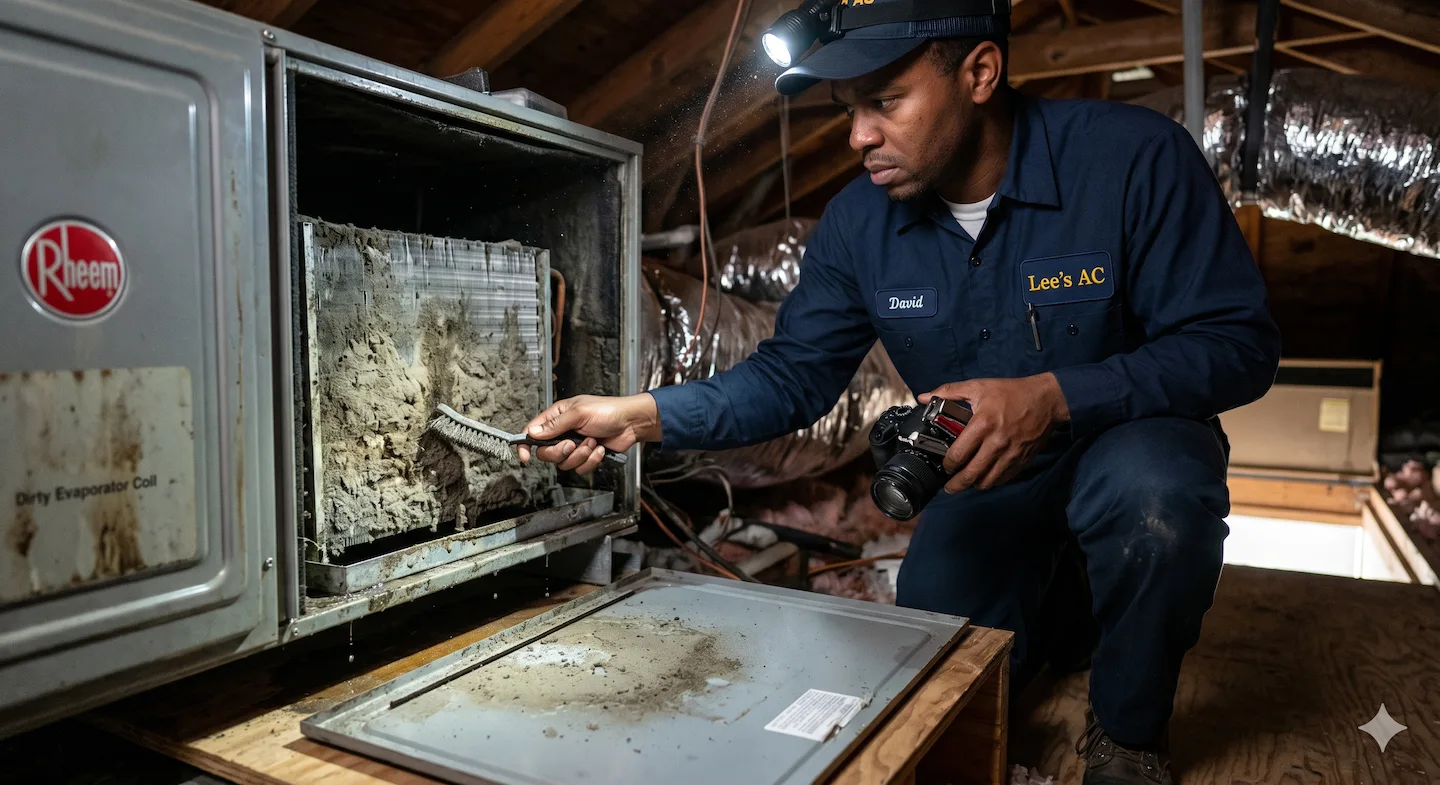
The evaporator coil sits inside your air handler and is responsible for absorbing heat from the air passing over it. Because it’s constantly cold and wet from condensation, it’s also a prime surface for mold and mildew to colonize. Over time, dust and skin cells from the air settle onto the coil. Mix that organic material with persistent moisture, and you’ve created an ideal breeding ground for biological growth. Every time your system runs, air passes directly over that contaminated surface before blowing into your living spaces — and you smell it immediately.
2. Stagnant Water in the Condensate Drain Pan
Directly beneath the evaporator coil sits the condensate drain pan, which catches the water that drips off the coil during normal operation. If the pan is slightly unlevel, corroded, or cracked, water won’t drain properly and will sit stagnant for days or weeks. That standing water becomes a breeding ground for mold, mildew, and bacteria — all of which produce that signature musty odor you’re noticing in your home.
3. A Clogged Condensate Drain Line
The condensate drain line carries water from the drain pan to the outside of your home. In Louisiana’s warm, humid climate, algae and slime build up inside the line over time and can block it entirely. When the line is clogged, water backs up into the drain pan, overflows, and can eventually cause water damage to your ceiling or walls — in addition to producing a persistent mildew smell throughout the home.
4. Leaky or Poorly Insulated Ductwork
Your ductwork often runs through your attic, which in Louisiana can reach extreme temperatures and humidity levels. If your ducts have gaps, cracks, or inadequate insulation, warm, humid attic air can infiltrate the air stream before it reaches your vents. That moisture doesn’t just cause odors — it contributes to mold growth inside the ducts themselves, spreading spores throughout every room your system serves.
A note for Lafayette homeowners: Louisiana’s humidity levels are among the highest in the country. Your AC system works significantly harder to remove moisture from the air compared to systems in drier climates, which means drainage components — the coil, pan, and drain line — take on far more moisture load. Regular inspections aren’t optional here; they’re essential.
Is Mold in Your HVAC System Dangerous?
Short answer: yes, and it deserves to be taken seriously. When mold spores circulate through your ductwork, they are distributed evenly to every room in your home. For most healthy adults, this causes irritation — itchy eyes, a runny nose, or a scratchy throat that seems to come and go without an obvious cause. For children, the elderly, or anyone with asthma, allergies, or a compromised immune system, the effects can be far more significant and include chronic respiratory symptoms, worsening asthma attacks, and prolonged sinus infections.
Mold in HVAC systems in Lafayette is particularly concerning because our high regional humidity creates ideal conditions for rapid spore growth. What starts as a small colony on a drain pan can spread quickly through the entire system if the root moisture issue isn’t resolved. If anyone in your household has been experiencing unexplained allergy flare-ups or respiratory irritation that seems to worsen when the AC runs, mold contamination in your system should be near the top of your suspect list.
What to Do About a Musty Smell in Your AC (DIY Steps)
Before calling a professional, there are a couple of things you can check and address on your own that sometimes resolve mild odor issues.
Change Your HVAC Air Filter Immediately
This is the single most overlooked fix for air quality problems, and it takes about five minutes. A clogged, saturated air filter restricts airflow, which causes the evaporator coil to run colder and collect more condensation than normal. It also means the filter itself can become a surface for mold growth. Pull your filter out and hold it up to the light — if you can’t see through it, it needs to be replaced right now. For Louisiana homes, where systems run heavily for eight or more months of the year, checking your filter monthly is a smart habit.
Inspect and Flush the Drain Line
Locate the PVC condensate drain line that exits your home (usually near the outdoor unit or through an exterior wall). If you see water backing up or no water dripping during system operation, your line may be partially or fully clogged. You can attempt to clear a minor blockage by slowly pouring plain white vinegar down the access port on the drain line — typically a capped T-fitting near the air handler. The vinegar helps dissolve algae and mild buildup. Let it sit for 30 minutes, then flush with clean water. Do not use bleach — it can produce harmful fumes inside your ductwork and may corrode certain drain pan materials.
If the line is still slow or backing up after flushing, the blockage is likely too significant for a DIY fix and needs professional attention.
When to Call a Professional Lafayette HVAC Contractor
DIY steps can address surface-level issues, but there are several tasks that genuinely require professional equipment and expertise to do safely and effectively. If the musty smell persists after you’ve changed the filter and flushed the drain line, it’s time to bring in a licensed technician. A professional AC maintenance visit from Lee’s AC can include:
- Chemical evaporator coil cleaning — Dissolves mold, mildew, and biological buildup from coil surfaces that can’t be safely cleaned with household products.
- Duct sanitization — Targets mold and bacterial growth inside the ductwork itself, not just at the source.
- UV air purifier installation — A UV light system installed inside the air handler kills mold and bacteria on contact before they ever enter your air stream, providing ongoing protection.
- Condensate drain pan repair or replacement — Corroded or cracked pans that hold standing water need to be replaced, not just cleaned.
- Ductwork inspection and sealing — Identifies attic air infiltration points contributing to moisture inside the system.
Our indoor air quality services are specifically designed to resolve the root causes of musty odors and biological contamination — not just mask the symptoms.
Frequently Asked Questions About Smelly Air Conditioners
Q: Will a musty AC smell go away on its own if I keep running the system?
No. If your system smells musty, there is an active source of moisture and organic matter fueling mold or bacterial growth somewhere inside it. Running the system continuously won’t eliminate that source — it will only push the spores deeper into your ducts and distribute them more widely throughout your home. The odor may temporarily seem to fade as your nose adjusts, but the underlying problem is still growing.
Q: How do I know if I have actual mold in my HVAC system?
The clearest signs are a persistent mildew odor that appears only when the AC runs, visible black or greenish smudges around your supply vents or on the air filter, and allergy or respiratory symptoms in household members that seem to worsen indoors. In Lafayette’s climate — where high humidity makes mold growth more aggressive — the most reliable confirmation is a physical coil inspection by a licensed HVAC technician.
Q: Can I use bleach to clean my AC drain pan?
It’s better to avoid it. Plain white vinegar or HVAC-specific pan treatment tablets are much safer choices. Bleach can emit harsh fumes that travel through your ductwork and into your living spaces, and over time it can degrade plastic drain components and corrode certain metal fittings. Vinegar is gentler, effective against algae and mild mold, and won’t damage your system.
Q: How much does a professional AC coil and system deep clean cost?
Pricing varies depending on system size and the extent of contamination, but a professional coil cleaning and drain service is a standard HVAC maintenance item that more than pays for itself in system efficiency gains. Clean evaporator coils transfer heat far more effectively than dirty ones, which means your system runs shorter cycles, uses less electricity, and experiences less wear. Contact Lee’s AC directly for an accurate estimate for your specific system.
Q: How often should I schedule professional AC maintenance in Louisiana?
At a minimum, once a year — but twice a year is ideal for Louisiana homeowners. A spring tune-up prepares your system for the intense humidity and heat of summer, while a fall visit gets everything ready for winter. Our Total Comfort Maintenance Plan covers both visits and keeps your system in peak condition year-round.
Breathe Fresh Air Again: Schedule an AC Deep Cleaning Today
A musty smell coming from your AC isn’t something to wait on. The longer moisture and mold are allowed to sit inside your system, the more invasive the contamination becomes — and the more it affects the air your family breathes every day. The good news is that in most cases, a thorough professional cleaning resolves the problem completely.
Lee’s AC has been serving Lafayette and surrounding communities for years, and we know exactly what Louisiana homes and HVAC systems face every summer. Our licensed, NATE-certified technicians will diagnose the source of the odor, clean and restore your system, and make sure drainage is functioning correctly so the problem doesn’t come back.
Call us today at (337) 232-5337 or request an appointment online — and get back to breathing clean, fresh air in your home.